Ever wondered why you keep checking your fitness tracker, language learning app, or even that productivity tool you downloaded months ago? Chances are, it’s not just about the features—it’s about how engaged they make you feel. And at the heart of that stickiness is one powerful concept: gamification.
Why Do Some Apps Keep Us Hooked While Others Get Deleted in Days?
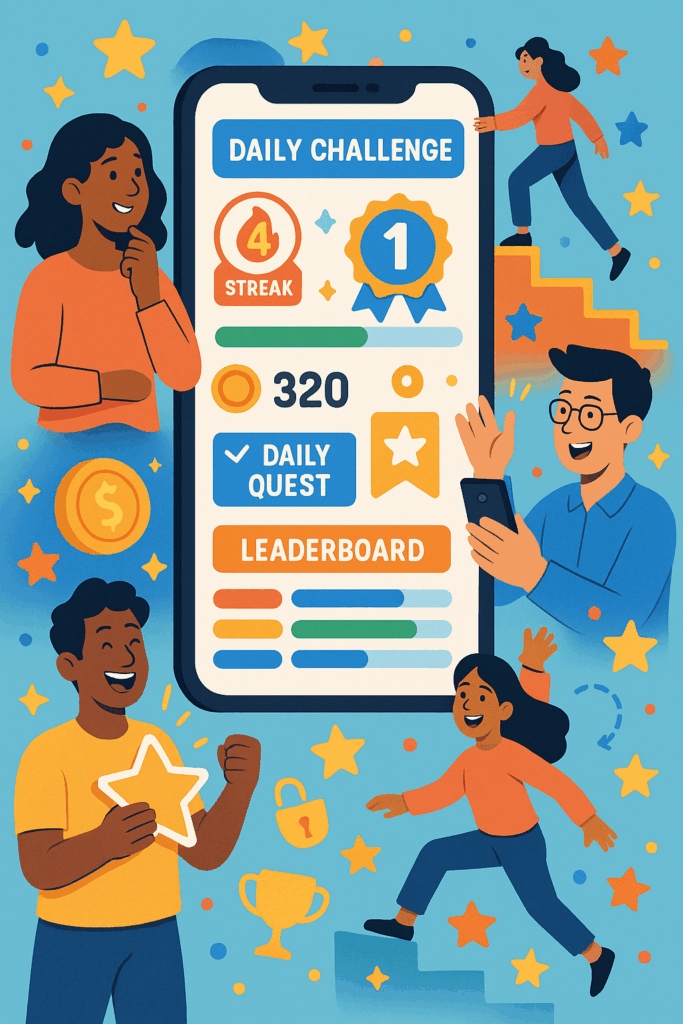
Gamification isn’t about turning everything into a game. It’s about using game design elements—points, badges, levels, challenges—to make everyday tasks more compelling. When done right, it keeps users motivated, emotionally invested, and coming back for more.
In this article, we’ll explore 5 game-changing strategies that top platforms use to drive user retention—and how you can apply them to your own product or content.
1. Progress Tracking: The Power of Visible Achievement
What It Is:
Humans love to see progress—it gives us a sense of accomplishment. Progress bars, checklists, and level systems are simple but effective tools to tap into this psychology.
Why It Works:
When users can visually track their journey, they’re more likely to stick with it. It creates a loop of motivation: complete a task, see your progress, feel good, repeat.
Example:
Duolingo uses a daily streak counter, XP levels, and skill trees. Missing a day can break your streak, so users keep coming back just to stay consistent. And it works—over 70% of users return within the first 7 days.
How to Use It:
- Add progress bars to onboarding or learning modules
- Use leveling systems to show skill development
- Show task completion percentages in dashboards
2. Reward Systems: Give Them a Reason to Return
What It Is:
Rewards trigger dopamine—the “feel-good” brain chemical. Points, badges, unlockables, or virtual currency can be used to create a rewarding feedback loop.
Why It Works:
People love recognition, even if it’s digital. A well-timed reward can reinforce behavior and make users feel valued.
Example:
Productivity app Forest lets users earn coins every time they stay focused. These coins can be used to grow virtual trees—or even contribute to real-world reforestation projects. This not only rewards attention but adds purpose.
How to Use It:
- Offer digital badges for milestones
- Provide virtual currency that can be spent or traded
- Introduce surprise rewards or easter eggs
3. Challenges & Quests: Turning Routine into Adventure
What It Is:
A challenge or quest gives users a goal beyond just using the app. It taps into our desire for mastery and exploration.
Why It Works:
Gamified challenges help break the monotony and encourage daily or weekly engagement. They create a sense of urgency and direction.
Example:
Nike Run Club offers monthly distance challenges with leaderboards. Users compete with others or set personal goals, which increases app usage and community interaction.
How to Use It:
- Create themed challenges based on time or goals
- Allow users to compete against others or themselves
- Add narrative elements to make the challenge more immersive
4. Social Features: Fueling Engagement Through Community
What It Is:
Games and platforms thrive when users feel like part of a tribe. Social features like leaderboards, friend challenges, or collaborative goals foster a sense of belonging.
Why It Works:
We’re social creatures—we like to compare, compete, and collaborate. When users see peers achieving things, it motivates them to keep up.
Example:
Fitbit lets you join step challenges with friends or coworkers. Seeing someone beat your step count pushes you to go for a walk—even if it’s just around your room.
How to Use It:
- Add leaderboards for achievements
- Enable peer-to-peer challenges or team-based goals
- Allow sharing of progress or rewards on social media
5. Narrative & Storytelling: Make It Meaningful
What It Is:
Gamification isn’t all points and badges. A compelling story or theme can transform a dull experience into an immersive one.
Why It Works:
Stories help users emotionally connect with their journey. When users feel like they’re part of something bigger, retention naturally improves.
Example:
Habitica turns your to-do list into an RPG. Completing tasks helps your avatar level up, earn gear, and defeat monsters. The story turns productivity into play.
How to Use It:
- Wrap tasks in a themed storyline (e.g., fantasy, sci-fi)
- Create avatars or characters users can personalize
- Progress through chapters as users complete real-life tasks
Final Thoughts: Engagement Isn’t Luck—It’s Design
User retention is one of the toughest challenges in product design. But gamification gives you a powerful set of tools to make the user journey more rewarding, more social, and more meaningful.
The best part? You don’t need to be building a game to use these strategies. Whether you’re creating a learning platform, fitness app, content hub, or ecommerce site—gamification can work wonders when it aligns with user motivation.
Call to Action:
Want to boost engagement right away? Start by adding a simple progress tracker to your onboarding flow or introduce a small weekly challenge. And don’t forget—test what works, listen to your users, and keep iterating. The game has just begun.

Berbagi cerita seputar karier, freelance, traveling hemat, dan pola hidup sehat
ala anak muda Indonesia. Di Kiddie Joy, gw nulis tutorial praktis biar lo bisa
ngerjain hal-hal kecil yang bikin hidup lebih ringan, mulai dari rapiin keuangan
freelance, jaga kesehatan di tengah deadline, sampai ngeplan liburan tanpa bikin
dompet jebol.