Online learning should feel smooth, intuitive, and engaging. But for many learners, it’s the opposite—frustrating, confusing, and even discouraging. What’s the culprit? Often, it’s not the content or the instructor—it’s the Learning Management System (LMS) and how it’s being used.
Are You Sabotaging Your Online Learners Without Realizing It?
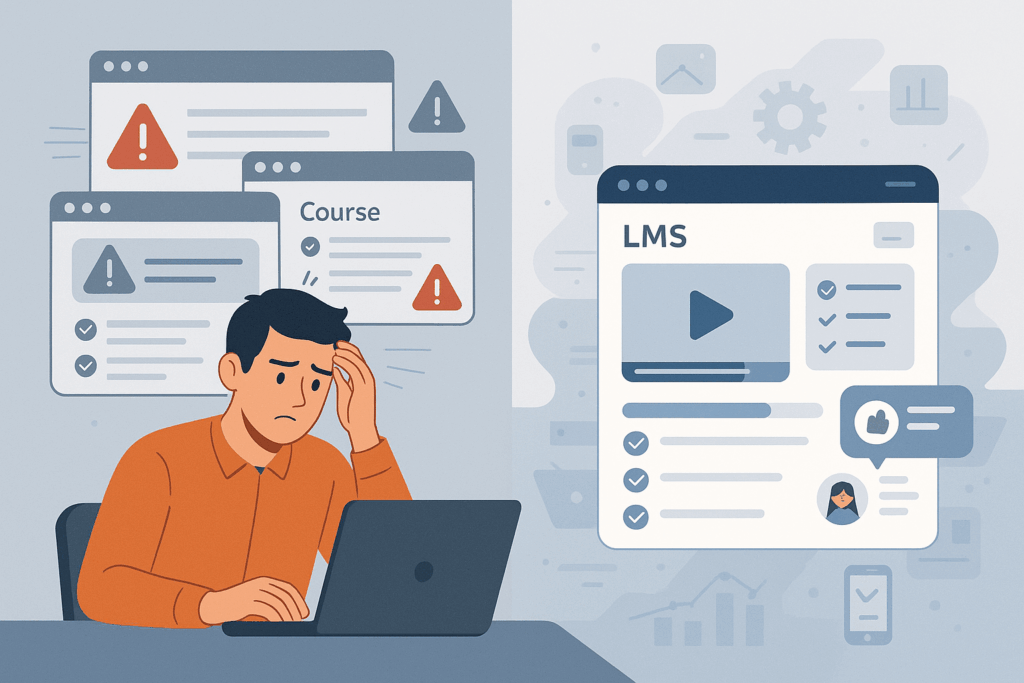
You might be surprised to learn that some of the most common LMS setups are actually hurting the learning experience instead of helping it. And the worst part? Many course creators, trainers, and even edtech teams don’t even realize it’s happening.
Let’s dive into five shocking LMS mistakes that could be silently driving your learners away—and how you can fix them.
1. Cluttered Navigation That Confuses Learners
If Users Can’t Find It, They Won’t Use It
When learners log into your LMS, the first few seconds matter. If the interface is cluttered with too many tabs, modules, or irrelevant links, they’re more likely to get frustrated and disengage.
Real-World Example:
A university noticed a 35% drop in module completion rates. After simplifying their LMS dashboard—removing redundant menus and adding clear progress indicators—completion rates bounced back by 22% in just two months.
What You Can Do:
Stick to a clean, intuitive layout. Group content logically, minimize distractions, and test your navigation with real users—not just your dev team.
2. Lack of Mobile Optimization
Learning Should Happen Anywhere, Not Just on a Laptop
In 2025, mobile learning isn’t optional—it’s expected. If your LMS isn’t responsive or easy to use on a smartphone, you’re cutting off a large chunk of your audience, especially younger learners or professionals on the go.
Quick Fact:
Over 55% of learners globally access training through mobile devices. A non-responsive LMS can feel outdated and frustrating.
Fix It Fast:
Choose an LMS with mobile-first design or use a dedicated app. Test your content on various screen sizes and make sure navigation, videos, and quizzes work smoothly.
3. Overwhelming Learners With Too Much Content at Once
More Isn’t Always Better
Dumping too much information without structure leads to cognitive overload. Learners may start strong but quickly burn out or drop out altogether.
A Better Approach:
Chunk your lessons into smaller, digestible sections. Use microlearning strategies—like 5-minute video lessons or bite-sized quizzes—to keep attention high and content retention stronger.
Use Case:
A corporate training program saw 60% higher quiz scores after breaking 45-minute lessons into five micro-modules, each with a focused goal.
4. No Feedback or Progress Tracking for Learners
Learners Need to Know How They’re Doing
When learners don’t receive timely feedback or can’t see their own progress, motivation drops. They may even abandon the course entirely, unsure of where they stand.
Common Oversight:
Many LMS platforms allow progress tracking—but course designers forget to activate it or don’t configure it properly.
Action Steps:
Turn on automatic progress indicators. Include regular feedback checkpoints—whether it’s a short quiz, a poll, or even a simple congratulatory message after module completion.
5. Ignoring the Power of Gamification and Engagement Tools
Learning Should Be Fun and Rewarding
Modern LMS platforms come packed with features like badges, leaderboards, and point systems—but most users never take advantage of them. These tools are more than just gimmicks—they tap into motivation psychology and make learning feel rewarding.
Research Insight:
Courses that use gamification see up to 50% higher engagement rates. Learners are more likely to return, complete lessons, and even recommend the course to others.
Start Simple:
Add small achievements like “First Quiz Completed” or “100% Score on Module 1.” These little wins can go a long way.
Q&A: Clearing Up Common LMS Concerns
Q: What if my LMS doesn’t have these features?
A: Consider migrating to a more modern, flexible platform. Many affordable LMS tools today offer mobile optimization, gamification, and analytics right out of the box.
Q: How do I know if my learners are struggling with the LMS?
A: Use analytics. High bounce rates, low module completion, or poor quiz performance may point to UX issues—not the content itself.
Q: Can small changes really make a big impact?
A: Absolutely. Even tweaking navigation or adding simple feedback tools can significantly boost learner satisfaction and retention.
Final Thoughts: Don’t Let Your LMS Be the Reason Learners Quit
A well-designed LMS should support your learners—not frustrate them. By avoiding these five common mistakes, you can create a learning experience that’s not only smoother, but more engaging, accessible, and rewarding.
Your content might be amazing—but if your LMS gets in the way, it won’t matter.
So what’s your next move? Audit your LMS today, ask for learner feedback, and make those small but powerful adjustments that could change everything.

Berbagi cerita seputar karier, freelance, traveling hemat, dan pola hidup sehat
ala anak muda Indonesia. Di Kiddie Joy, gw nulis tutorial praktis biar lo bisa
ngerjain hal-hal kecil yang bikin hidup lebih ringan, mulai dari rapiin keuangan
freelance, jaga kesehatan di tengah deadline, sampai ngeplan liburan tanpa bikin
dompet jebol.