Picture this: a student reviewing key concepts while commuting, an employee completing a quick micro-course during lunch, or a professional practicing new skills through a gamified app before a big project. Mobile learning is no longer just a trend—it’s redefining how we learn, teach, and grow. With smartphones in nearly every pocket, education is becoming more accessible, personalized, and interactive than ever before.
Learning Anytime, Anywhere
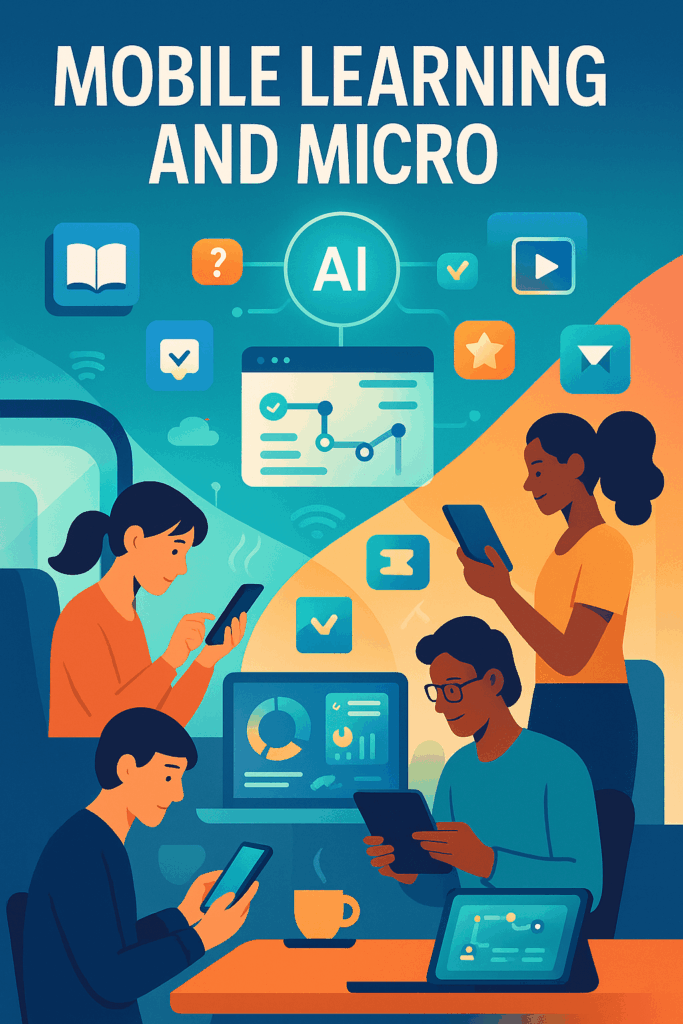
But what strategies truly make mobile learning effective? Let’s uncover nine powerful approaches that are shaping the future of education.
1. Microlearning for Bite-Sized Knowledge
Gone are the days of long, drawn-out lectures. Microlearning delivers knowledge in short, digestible lessons that can be completed in minutes. Whether it’s a three-minute video or a quick interactive quiz, microlearning keeps learners engaged and improves retention.
Example in Action
Duolingo has perfected this strategy by offering language lessons in bite-sized chunks, allowing learners to practice daily without feeling overwhelmed.
2. Gamification to Boost Engagement
Adding game-like elements such as badges, points, and leaderboards makes learning more fun and motivating. Gamification taps into the psychology of achievement and competition, keeping learners coming back for more.
Why It Works
- Increases motivation through rewards.
- Encourages healthy competition.
- Turns repetitive tasks into engaging challenges.
3. Personalization Through AI and Data
Mobile learning platforms increasingly use AI to tailor lessons based on progress, preferences, and performance. This ensures that no two learners have the same journey—content adapts to individual strengths and weaknesses.
Storytelling Example
A working professional using an AI-driven app might receive more practice in areas they struggle with while skipping topics they’ve already mastered.
4. Video-Based Learning for Visual Impact
Video remains one of the most powerful tools in education. With mobile devices, students can watch short tutorials, animated explainers, or real-world demonstrations anytime, anywhere.
Data Point
Studies show that learners retain up to 95% of a message when delivered through video compared to just 10% via text.
5. Interactive Quizzes and Assessments
Learning by doing reinforces knowledge better than passive consumption. Mobile platforms now embed quizzes, polls, and instant feedback mechanisms to keep learners active participants.
Quick Tip
Platforms like Kahoot! and Quizlet transform assessments into engaging, competitive activities accessible directly from mobile phones.
6. Social Learning and Peer Collaboration
Education doesn’t happen in isolation. Mobile learning platforms integrate social features—like discussion boards, chat groups, and peer feedback—to create communities of learners.
Example in Action
LinkedIn Learning encourages peer sharing, allowing professionals to recommend courses, discuss lessons, and apply insights in real-world settings.
7. Offline Learning Options for Accessibility
Not every learner has constant internet access. Forward-thinking platforms provide offline downloads, enabling students to learn anytime—even in areas with poor connectivity.
Why It Matters
- Increases inclusivity.
- Bridges the digital divide.
- Empowers learners in remote or rural areas.
8. Continuous Learning Through Push Notifications
Sometimes, a simple nudge is all it takes to keep learners on track. Mobile learning apps send reminders, motivational messages, or prompts to revisit key lessons—promoting consistent learning habits.
Storytelling Example
Think of a daily notification encouraging you to practice five new vocabulary words. Over time, this habit builds real mastery.
9. Real-World Applications and Scenario-Based Learning
Mobile learning becomes most impactful when connected to real-life challenges. Scenario-based modules let learners apply knowledge to practical situations, making skills more memorable and useful.
Example in Action
A healthcare training app might simulate patient interactions, helping nurses practice decision-making before facing real scenarios.
Q&A: Common Questions About Mobile Learning Strategies
Q: Is mobile learning only for younger students?
Not at all. Mobile learning supports all age groups—from K-12 students to professionals pursuing lifelong learning.
Q: How effective is mobile learning compared to traditional methods?
When done right, mobile learning improves retention, engagement, and accessibility, often outperforming traditional classroom methods.
Q: Do learners need expensive devices to benefit?
No. Many mobile learning platforms are optimized for basic smartphones, ensuring accessibility across different income levels.
Conclusion: Embracing the Future of Education
The future of education isn’t limited to classrooms or lecture halls—it fits into our pockets. Mobile learning strategies like microlearning, gamification, and personalization are empowering learners to take control of their growth, anytime and anywhere. For educators and institutions, adopting these strategies means staying relevant in a world where flexibility and accessibility are key.
Call to Action: Whether you’re a student, educator, or organization, now is the time to explore mobile learning. Start small, adopt one of these strategies, and see how it transforms your learning journey in 2025 and beyond.

Berbagi cerita seputar karier, freelance, traveling hemat, dan pola hidup sehat
ala anak muda Indonesia. Di Kiddie Joy, gw nulis tutorial praktis biar lo bisa
ngerjain hal-hal kecil yang bikin hidup lebih ringan, mulai dari rapiin keuangan
freelance, jaga kesehatan di tengah deadline, sampai ngeplan liburan tanpa bikin
dompet jebol.