Let’s face it — traditional classrooms weren’t designed for the diverse, dynamic learners we see today. One-size-fits-all teaching is becoming a relic, and students are demanding more personalized, meaningful, and effective learning experiences.
Enter adaptive learning — a smart, tech-powered approach that adjusts in real time to each student’s pace, strengths, and learning style. It’s no longer an experimental tool or reserved for elite institutions. In 2025 and the years ahead, adaptive learning is becoming the new normal.
Education Is Evolving — Are We Ready?
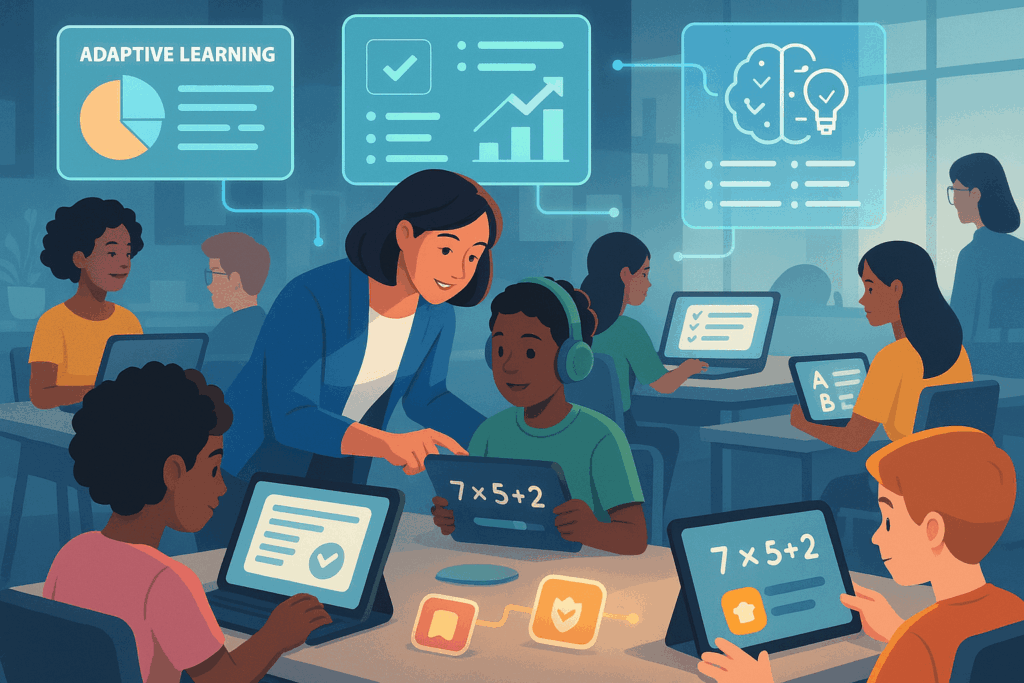
In this article, we’ll dive into five powerful reasons why adaptive learning will take over classrooms this decade — and how educators, students, and even parents can ride the wave.
1. It Makes Learning Truly Personalized (At Scale)
Why It Matters
Every student learns differently — some grasp concepts quickly, others need more time and repetition. Adaptive learning platforms use algorithms to tailor content based on student performance, behavior, and feedback in real time.
How It Works
Imagine a platform that gives a struggling math student more visual aids while pushing an advanced learner to solve more complex problems — all automatically. That’s the power of adaptive learning engines like DreamBox, Knewton, or Smart Sparrow.
Real-World Story
In a pilot program at a U.S. middle school, students using an adaptive math app improved test scores by 20% over one semester — with teachers reporting less time spent on reteaching.
Key Takeaway
Adaptive systems scale what human teachers already strive to do: meet students where they are.
2. It Frees Up Teachers to Focus on What Matters Most
The Challenge
Teachers are often overwhelmed by grading, planning, and managing diverse classroom needs. Adaptive tools don’t replace them — they empower them.
The Impact
- Automates routine assessments
- Flags students who need more help
- Provides insights into learning gaps
Educator Insight
A high school science teacher shared how using an adaptive learning dashboard let her spend more time facilitating discussions and mentoring struggling students, instead of grading quizzes late into the night.
What You Can Do
- Use platforms that integrate adaptive learning dashboards (e.g., Edmodo, Khan Academy)
- Shift from “lecturing” to “coaching”
3. It Boosts Engagement Through Gamification and Feedback
Why Students Love It
Let’s be honest: Students today are used to feedback loops from apps, games, and social media. Adaptive learning taps into this by providing instant feedback, interactive content, and progress tracking that feels rewarding.
Example Features
- Skill trees that unlock new topics as students progress
- Points, badges, or leaderboards for milestones
- Personalized encouragement messages
Case Study
An adaptive reading app used in a Brazilian elementary school increased daily learning time by 35% — simply because students wanted to “level up.”
Engagement Tip
Look for platforms with built-in feedback and goal tracking — not just static content.
4. It Supports Equity by Closing Learning Gaps Early
The Problem
Traditional assessments often detect learning gaps after a student is already falling behind. Adaptive learning flips that timeline.
How It Helps
- Detects subtle performance dips in real time
- Adjusts lesson difficulty immediately
- Gives teachers data to intervene early
The Big Picture
In low-income districts where resources are stretched thin, adaptive tools can act as virtual teaching assistants — ensuring no student gets left behind just because they can’t raise their hand fast enough.
Actionable Step
Implement adaptive tools in high-need classrooms first to maximize impact.
5. It Prepares Students for a Tech-Driven Future
Future-Proof Learning
Today’s students are entering a world where AI, automation, and continuous learning are the norm. Adaptive learning gets them used to self-directed, data-informed, and tech-enabled learning environments.
Bonus Benefit
Adaptive learning fosters a growth mindset by showing students that improvement is possible and measurable — not fixed by grades alone.
What the Research Says
A study by McKinsey showed that students who used adaptive learning tools regularly were 1.5x more likely to report confidence in tackling new academic challenges.
What Schools Should Do
- Align curriculum with adaptive platforms that support lifelong learning habits
- Encourage reflection and goal-setting through the platforms’ analytics features
Conclusion: A Smarter Way to Learn Is Already Here
Adaptive learning isn’t just another edtech trend — it’s a meaningful shift toward more personalized, efficient, and empowering education. It doesn’t eliminate the role of teachers or the value of classroom interaction. Instead, it enhances both.
From real-time adjustments to improved engagement and equity, the benefits are clear. Schools that embrace this now will not only improve outcomes — they’ll shape a generation of learners who are ready for what’s next.
Call to Action
Are you ready to make learning smarter for your students or institution?
Start by exploring one adaptive tool. Test it with a small group. See the impact. Whether you’re an educator, administrator, or parent — now is the time to lean into the future of learning.

Berbagi cerita seputar karier, freelance, traveling hemat, dan pola hidup sehat
ala anak muda Indonesia. Di Kiddie Joy, gw nulis tutorial praktis biar lo bisa
ngerjain hal-hal kecil yang bikin hidup lebih ringan, mulai dari rapiin keuangan
freelance, jaga kesehatan di tengah deadline, sampai ngeplan liburan tanpa bikin
dompet jebol.