Remote learning sounds like a dream: no commute, comfy clothes, and full control of your schedule. But if you’ve ever found yourself zoning out during a Zoom call, procrastinating until midnight, or forgetting half of what you learned the day before, you’re not alone.
You’ve Been Doing It Wrong—Until Now
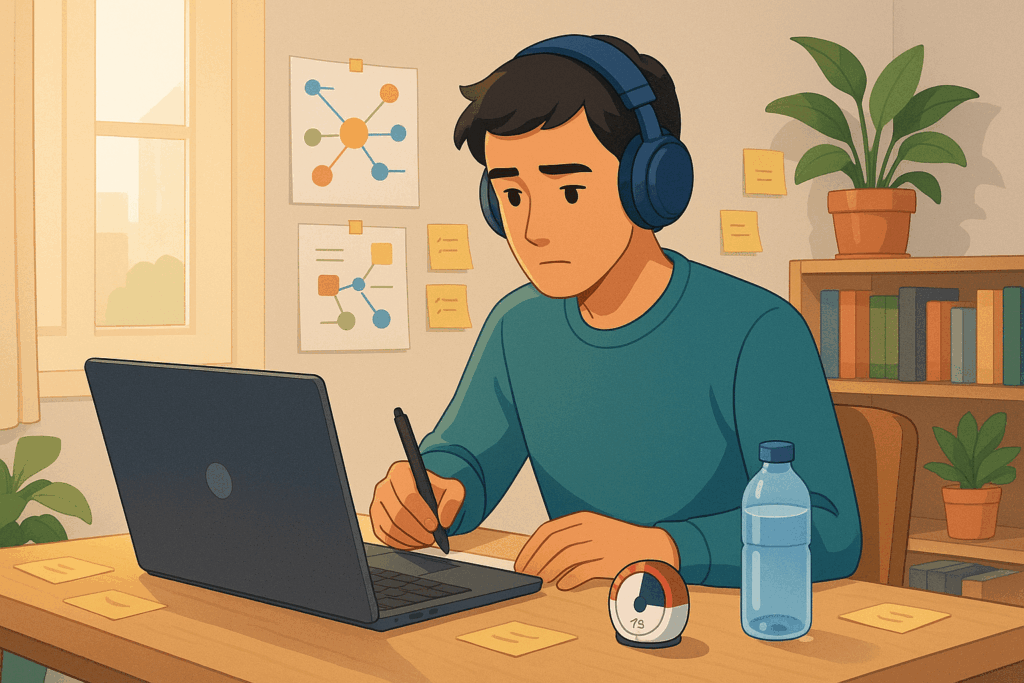
The truth is, remote learning requires more than just a good Wi-Fi connection—it takes strategy, structure, and a few clever tricks. In this article, we’ll walk you through five practical hacks that can instantly improve your focus, motivation, and retention. Whether you’re a student, a professional, or just someone trying to master a new skill online, these tips are designed to make remote learning easier, smarter, and actually enjoyable.
1. Design Your “Productivity Zone”
Your Environment Sets the Tone
Remote learning starts with where you study. Working from your bed or couch might sound cozy, but your brain associates those places with rest—not focus.
What Works
Create a dedicated learning space. It doesn’t have to be fancy—a small desk by the window or a quiet corner will do. Add elements that trigger your brain into “learning mode”:
- A desk lamp to signal study time
- Noise-canceling headphones to reduce distractions
- A whiteboard or sticky notes to visualize tasks
Real-Life Example
Maria, a college sophomore, struggled with online lectures—until she turned a corner of her kitchen into a “focus nook.” She added a second-hand desk, used Spotify’s “Deep Focus” playlist, and started scoring better in quizzes within two weeks.
2. Master the Pomodoro Technique (with a Twist)
Time Management That Actually Works
The Pomodoro Technique is famous for a reason: it trains your brain to work in short, focused bursts. But when adapted to remote learning, it becomes even more powerful.
How to Hack It
- Study for 25 minutes
- Take a 5-minute break
- Repeat 4 cycles, then take a 15-minute break
During breaks, don’t scroll social media. Instead: stretch, drink water, or do a quick chore—things that refresh you without hijacking your attention span.
Try This App
Apps like Focus To-Do or Pomofocus.io help you track Pomodoro sessions and keep distractions at bay.
3. Go Visual: Turn Lessons into Mind Maps
Ditch Boring Notes
Writing pages of linear notes? There’s a better way. Mind mapping helps you see connections between ideas, making information easier to recall.
Tools to Try
- Freehand (for Google Workspace users)
- XMind (cross-platform)
- Pen & Paper (for visual thinkers who prefer analog)
Data Doesn’t Lie
A 2020 study from the Journal of Cognitive Science found that students using mind maps scored 23% higher in retention tests than those using traditional note-taking methods.
4. Gamify Your Learning Goals
Make Progress Fun
Motivation is hard to maintain—especially online. But turn your progress into a game, and suddenly learning feels like a challenge you want to conquer.
How to Do It
- Break goals into small milestones
- Set rewards (a movie, snack, or 30 mins of gaming)
- Use gamified platforms like Duolingo (for language), Habitica (for habits), or Brilliant.org (for STEM subjects)
Story from the Field
Johan, an aspiring data analyst, was burning out on Excel tutorials—until he turned each completed module into “XP” points. After hitting his weekly target, his reward? An uninterrupted Sunday for hiking. Two months later, he landed an internship.
5. Teach to Remember—Yes, Really
Teaching Reinforces Learning
Want to make something stick? Try explaining it to someone else. Teaching forces you to organize your thoughts, simplify complex ideas, and identify gaps in your knowledge.
Don’t Have an Audience? Fake It.
- Record a short video explaining a concept
- Pretend to present to an imaginary class
- Summarize your learning in a blog or journal
Backed by Science
According to a study published in Applied Cognitive Psychology, learners who expected to teach information performed significantly better in retention tests than those who only studied it for a quiz.
Final Thoughts: Learning Smarter, Not Harder
Remote learning doesn’t have to feel like a struggle. With a few smart tweaks—from optimizing your workspace to using techniques like Pomodoro and mind mapping—you can make online learning more effective and even enjoyable.
If you’ve been hitting roadblocks or just want to level up your skills, try applying at least one hack today. You’ll be surprised how quickly your focus sharpens and your confidence grows.
Ready to upgrade your learning game? Pick a hack, apply it for a week, and track your results. Let us know what works best for you!

Berbagi cerita seputar karier, freelance, traveling hemat, dan pola hidup sehat
ala anak muda Indonesia. Di Kiddie Joy, gw nulis tutorial praktis biar lo bisa
ngerjain hal-hal kecil yang bikin hidup lebih ringan, mulai dari rapiin keuangan
freelance, jaga kesehatan di tengah deadline, sampai ngeplan liburan tanpa bikin
dompet jebol.