Once upon a time, online learning was just about uploading PDFs or pre-recorded lectures. Today, it’s a dynamic ecosystem powered by smart tools, analytics, and interactivity. Learning Management Systems (LMS) sit at the heart of this transformation, shaping how institutions, corporations, and even individuals deliver and experience education. The exciting part? LMS technology is moving at lightning speed.
The Future of Learning Is Already Here
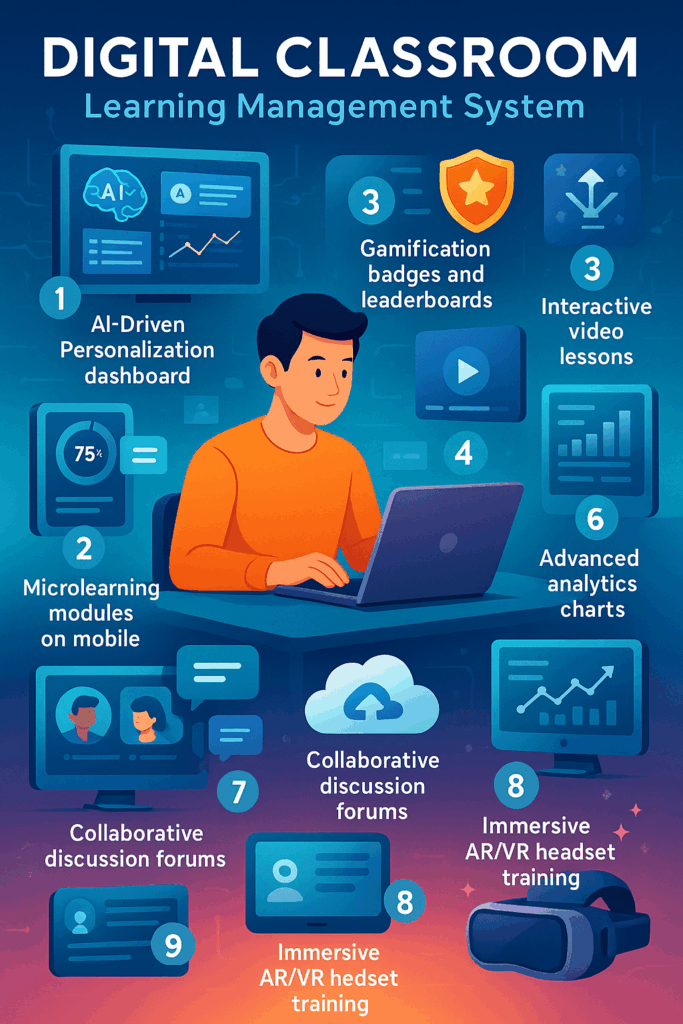
In this article, we’ll explore 9 game-changing LMS trends that are set to transform e-learning forever.
1. AI-Powered Learning Personalization
Why It Matters
Artificial Intelligence is revolutionizing how LMS platforms deliver content. Instead of a “one-size-fits-all” approach, AI creates personalized learning paths.
Example
Think of Netflix-style recommendations—except it’s for your learning modules. A student struggling with math might automatically get extra quizzes, while another gets advanced problem sets.
2. Microlearning Modules for Busy Learners
The Trend
Attention spans are shrinking, and learners want information in bite-sized portions. Microlearning delivers lessons in 5–10 minute chunks.
Storytelling
Imagine you’re a busy professional with only 15 minutes between meetings. A short micro-lesson on leadership skills fits perfectly into your schedule.
3. Gamification and Interactive Assessments
Why It Works
Adding game elements—like points, badges, and leaderboards—turns learning into a more engaging experience.
Example
Duolingo thrives on gamification. Now, LMS platforms are adopting similar tactics to keep learners motivated.
4. Mobile-First Learning Experiences
The Shift
Smartphones are the go-to device for most learners. LMS platforms are increasingly designed to work seamlessly on mobile, not just desktops.
Data Point
According to Statista, over 60% of e-learning users access training through mobile devices.
5. Video-Based Learning with Interactive Features
The Evolution
Static videos are out. Interactive videos—where learners can click, answer questions, or explore branches within the video—are in.
Storytelling
Picture a nursing student watching a simulation video where they choose how to treat a patient, and the video changes based on their choice.
6. Advanced Learning Analytics
Why Analytics Matter
Educators and trainers want more than completion rates. Advanced LMS analytics now track engagement, knowledge gaps, and performance trends.
Example
A company training program can pinpoint exactly where employees struggle, allowing managers to refine content and save time.
7. Social and Collaborative Learning
The Human Side
Learning isn’t just individual—it’s social. LMS platforms are building features like forums, peer reviews, and group projects.
Example
An LMS discussion board that feels like a LinkedIn group, where learners exchange tips, ask questions, and share resources.
8. Cloud-Based and Scalable Solutions
Why It’s Essential
Cloud-based LMS platforms allow institutions to scale easily without heavy IT infrastructure. They’re secure, flexible, and accessible anywhere.
Storytelling
Think about universities during the pandemic—cloud LMS platforms enabled them to switch to online learning almost overnight.
9. Integration with Emerging Technologies (AR/VR and Beyond)
The Game-Changer
AR and VR bring immersive experiences into learning. Imagine practicing surgical techniques in a virtual lab before entering a real one.
Example
Medical schools and engineering programs are already experimenting with VR-powered training through LMS platforms.
Conclusion: The Future of LMS Is Bright and Bold
From AI-driven personalization to immersive VR classrooms, LMS platforms are no longer just digital filing cabinets—they’re engines of transformation. These 9 trends show that e-learning is shifting toward smarter, more interactive, and highly engaging experiences.
Call-to-Action:
Whether you’re an educator, a corporate trainer, or a learner, it’s time to embrace these innovations. Which of these LMS trends do you think will impact your world the most—and how will you prepare for the future of e-learning?

Berbagi cerita seputar karier, freelance, traveling hemat, dan pola hidup sehat
ala anak muda Indonesia. Di Kiddie Joy, gw nulis tutorial praktis biar lo bisa
ngerjain hal-hal kecil yang bikin hidup lebih ringan, mulai dari rapiin keuangan
freelance, jaga kesehatan di tengah deadline, sampai ngeplan liburan tanpa bikin
dompet jebol.