Let’s face it: traditional classrooms and one-size-fits-all learning methods are quickly becoming outdated. Whether you’re a student trying to stay ahead, a teacher searching for smarter tools, or a curious learner looking to upskill, educational technology (EdTech) has unlocked powerful new ways to learn, teach, and grow.
Learning Will Never Be the Same—And That’s a Good Thing
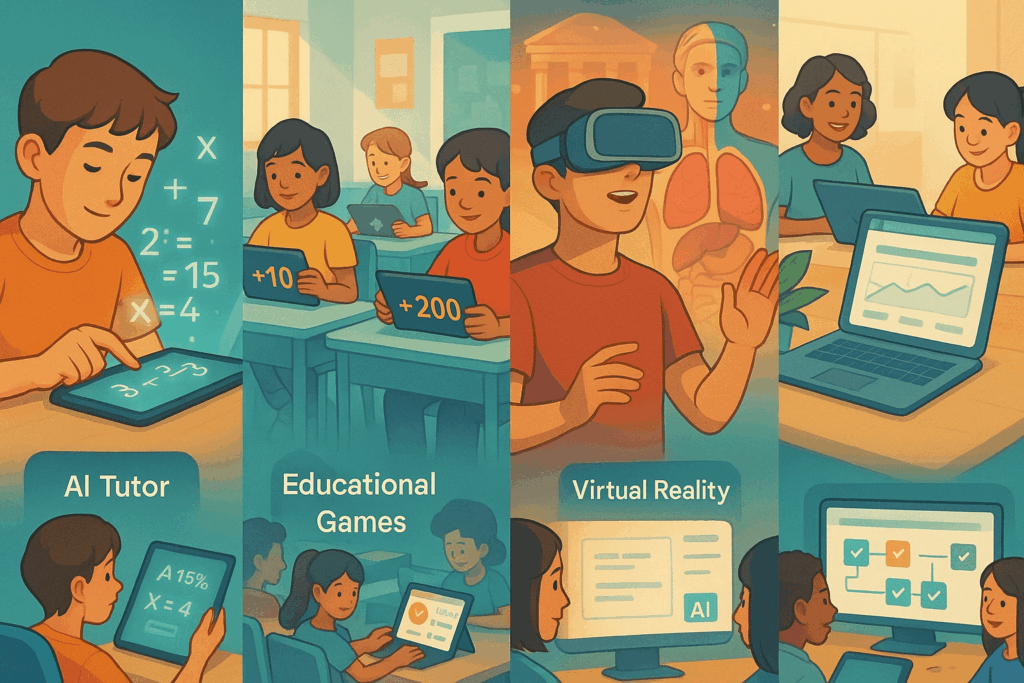
And here’s the kicker—many of the best tools out there are still under the radar.
In this article, we’ll break down five EdTech innovations that are not only transforming education, but doing so in ways that are flexible, fun, and insanely effective. You’ll probably wish you had discovered some of these sooner.
1. AI-Powered Personal Tutors: Learn at Your Own Pace
What It Is
Imagine having a tutor available 24/7, ready to answer your questions, explain difficult concepts, and adapt to your learning style. That’s what AI-powered tutoring platforms like Khanmigo (from Khan Academy) and Socratic by Google aim to do.
Why It Matters
Instead of waiting for your teacher to reply or searching endless videos online, you get instant, personalized help. These AI tutors adjust explanations based on your responses, helping you truly understand instead of just memorize.
Real-World Story
A high school student struggling with algebra started using Khanmigo. Within two months, their test scores jumped from C’s to solid A’s—not because they studied more, but because they finally understood the material.
2. Gamified Learning Platforms: Turn Studying Into a Game
What It Is
Platforms like Kahoot!, Duolingo, and Quizizz use game mechanics—like points, leaderboards, and rewards—to make learning feel more like play than work.
Why It Matters
Gamification keeps users engaged and motivated, especially younger learners. When you turn lessons into interactive challenges, retention skyrockets.
Real-World Story
An English teacher in Indonesia used Quizizz daily to review vocabulary. Engagement in her class tripled, and even the shy students started participating actively.
3. Immersive Virtual Classrooms: Learn Beyond the Walls
What It Is
Using virtual and augmented reality (VR/AR), platforms like ENGAGE and zSpace allow students to step inside a volcano, explore the human heart, or simulate physics experiments—all without leaving the room.
Why It Matters
Complex subjects become tangible and memorable. It’s one thing to read about ancient Rome—it’s another to walk its streets in 3D and interact with historical figures.
Real-World Story
In a U.S. school district, biology students using VR tools retained 40% more information about human anatomy compared to those using textbooks alone.
4. Adaptive Learning Platforms: Smarter Lessons for Smarter Outcomes
What It Is
Platforms like Smart Sparrow, DreamBox, and IXL use AI to analyze student performance in real time and adjust the content accordingly.
Why It Matters
Not all learners are the same. Adaptive learning ensures that each student gets a tailored experience, reducing frustration and increasing mastery.
Real-World Story
A school in Australia piloted Smart Sparrow for science education. Within one semester, over 75% of students improved their grades by at least one full letter.
5. Collaborative Tools That Mirror the Real World
What It Is
With tools like Google Workspace for Education, Padlet, and Miro, students and teachers can co-create, brainstorm, and present ideas together in real time—no matter where they are.
Why It Matters
Today’s workplaces thrive on collaboration and communication. These tools not only prepare students for the modern workforce but also boost creativity and engagement in group projects.
Real-World Story
During the pandemic, a group of university students in the Philippines used Miro to co-design a marketing campaign. They ended up winning a regional innovation contest—without ever meeting in person.
Why These Innovations Matter Now More Than Ever
They Close Gaps
These tools help bridge gaps in access, comprehension, and engagement—especially in underserved communities or during remote learning.
They Support Lifelong Learning
Whether you’re 15 or 50, EdTech platforms offer accessible, on-demand learning that adapts to your goals and pace.
They Make Learning Feel Natural
By using AI, interactivity, and collaboration, education no longer feels like a chore. It becomes part of life—something you actually want to do.
Final Thoughts: Don’t Wait to Embrace the Future of Learning
The way we learn is changing fast—and for the better. These five EdTech innovations are just the beginning of a smarter, more connected, and more engaging educational landscape. And the best part? Most of these tools are free or affordable, and they’re available right now.
What You Can Do Today
- Pick one tool from the list and explore it—whether for yourself, your child, or your students.
- Share this article with educators or learners in your circle who could benefit from smarter tech.
- Stay updated—the EdTech space evolves quickly, and there’s always something new to try.

Berbagi cerita seputar karier, freelance, traveling hemat, dan pola hidup sehat
ala anak muda Indonesia. Di Kiddie Joy, gw nulis tutorial praktis biar lo bisa
ngerjain hal-hal kecil yang bikin hidup lebih ringan, mulai dari rapiin keuangan
freelance, jaga kesehatan di tengah deadline, sampai ngeplan liburan tanpa bikin
dompet jebol.