Let’s be honest: keeping users engaged today is hard. Attention spans are shrinking, competition is everywhere, and your audience is just one click away from moving on. So how do you make them stay?
The answer lies in a strategy that’s both fun and psychologically effective: gamification.
Why Gamification Works—and Why You Should Care
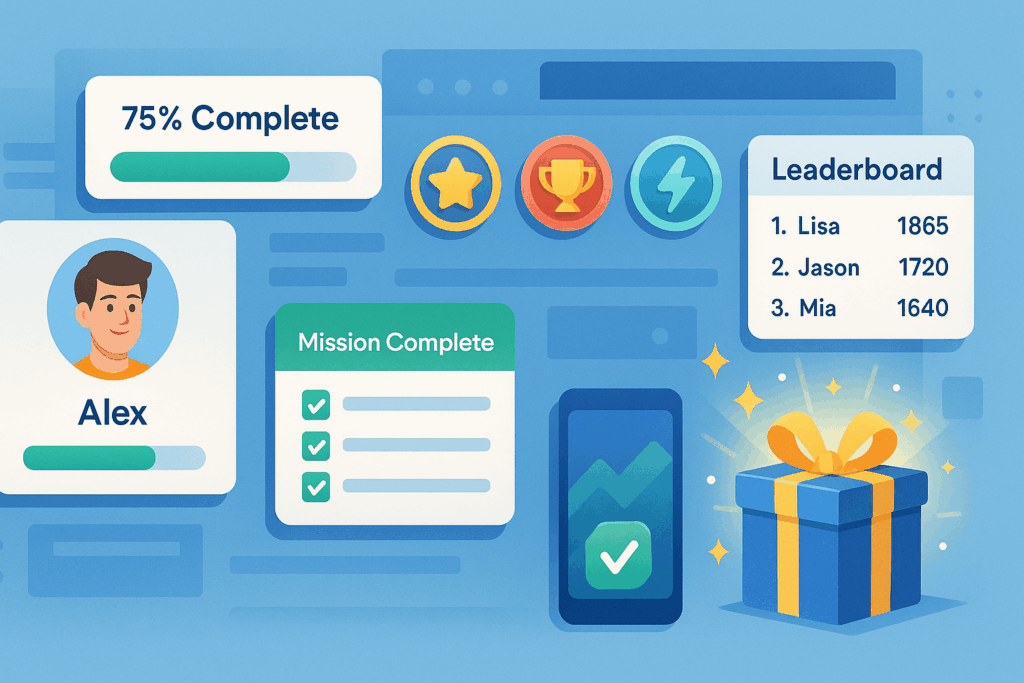
Gamification isn’t about turning your website or app into a literal game. It’s about weaving in game-like elements that trigger motivation, curiosity, and reward-seeking behavior. From points and badges to progress bars and challenges—these elements can turn a passive experience into an addictive one.
In this article, we’ll break down five proven gamification strategies that are easy to implement and actually work to keep your audience coming back.
1. Progress Bars & Achievement Tracking: Show the Journey
Why It Works
People love seeing progress—it gives them a sense of accomplishment and encourages them to keep going. A progress bar taps into our brain’s need for completion.
Real-World Example
LinkedIn shows a profile completeness bar, nudging users to fill out their profile. The closer you get to 100%, the more compelled you feel to finish.
How You Can Use It
- In onboarding flows (e.g., “Complete 3 of 5 steps”)
- In user profiles (e.g., “75% completed”)
- For content unlocks (e.g., “Read 3 articles to unlock bonus content”)
2. Badges & Rewards: Make Achievements Visible
Why It Works
Gamified rewards like badges or levels offer social proof and internal validation. They turn everyday actions into meaningful accomplishments.
Real-World Example
Duolingo gives users daily streak badges, XP points, and milestone achievements—all to make language learning feel like leveling up in a game.
How You Can Use It
- Award badges for actions (e.g., first comment, 10 purchases, 100 likes)
- Create tiered systems (e.g., Bronze, Silver, Gold members)
- Display achievements publicly to boost motivation
3. Leaderboards: Tap Into Healthy Competition
Why It Works
Leaderboards leverage competitive spirit, especially when users see themselves climbing the ranks. It’s a public challenge that keeps users coming back.
Real-World Example
Fitbit ranks users based on daily steps. Users log in repeatedly to beat their friends or maintain their spot.
How You Can Use It
- Show top contributors, shoppers, or readers weekly
- Create challenges with time limits (e.g., “Top 10 this month”)
- Segment boards (by location, group, or user type) to keep things fair
4. Challenges & Quests: Turn Actions Into Adventures
Why It Works
Framing tasks as challenges or quests makes routine actions feel exciting. This taps into users’ need for mastery and achievement.
Real-World Example
Nike Run Club offers monthly running challenges. Users who complete them unlock digital trophies and bragging rights.
How You Can Use It
- Create content quests (e.g., “Read 5 articles this week”)
- Offer product discovery missions (e.g., “Try 3 new tools in your dashboard”)
- Tie quests to seasonal campaigns (e.g., “Holiday Badge Challenge”)
5. Random Rewards & Surprise Elements: Keep It Unexpected
Why It Works
Randomness adds excitement. Variable rewards trigger the same psychological mechanics behind slot machines—users want to keep engaging to see what happens next.
Real-World Example
Google Chrome’s Dino Game randomly appears when you lose internet, turning a frustrating moment into a fun, unexpected interaction.
How You Can Use It
- Include mystery boxes or spins after key actions
- Offer random discounts or gifts for frequent users
- Use surprise “thank-you” popups to boost retention
Bonus Tip: Don’t Over-Gamify
While gamification is powerful, overusing it can backfire. If everything becomes a game, the experience may feel forced or gimmicky. The key is balance—use gamification where it adds value, not as a band-aid for weak content or UX.
Final Thoughts: Make Engagement Feel Natural (and Fun)
Gamification isn’t about flashy gimmicks. It’s about understanding what motivates your audience and tapping into those triggers in subtle, effective ways. Whether you’re running a learning platform, an e-commerce site, or a SaaS dashboard—adding just one or two of these strategies can transform passive users into engaged regulars.
So, which strategy will you try first? Start small, test your results, and iterate. Because the truth is, when your product feels like a game… people just can’t stop playing.

Berbagi cerita seputar karier, freelance, traveling hemat, dan pola hidup sehat
ala anak muda Indonesia. Di Kiddie Joy, gw nulis tutorial praktis biar lo bisa
ngerjain hal-hal kecil yang bikin hidup lebih ringan, mulai dari rapiin keuangan
freelance, jaga kesehatan di tengah deadline, sampai ngeplan liburan tanpa bikin
dompet jebol.