Imagine a classroom where every student learns at their own pace, focuses on their strengths, and gets exactly the help they need — right when they need it. That’s not a dream anymore. Thanks to personalized and adaptive learning, schools around the world are changing how education works — and the results are impressive.
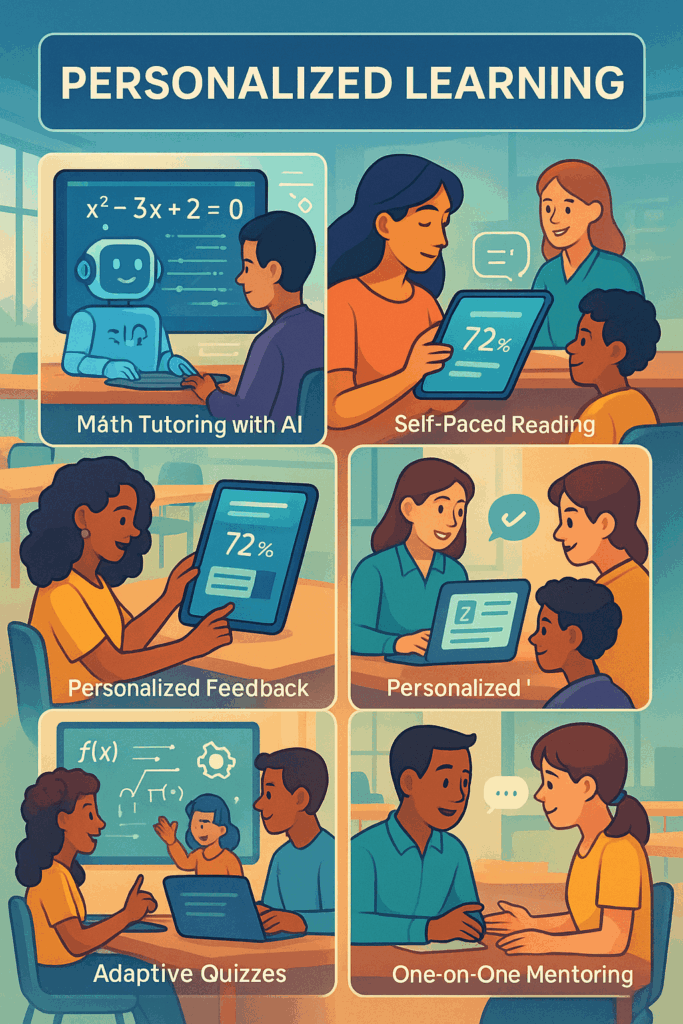
But how does it actually look in practice? Let’s explore six real examples of how personalized learning is helping students succeed, one learner at a time.
What Is Personalized Learning?
Before we jump into the real-world stories, let’s clarify what we’re talking about.
Personalized Learning 101
Personalized learning tailors the educational experience to each student’s needs, interests, and learning style. It often involves:
- Customized learning paths
- Real-time feedback
- Data-driven instruction
- Student autonomy and choice
Adaptive learning, a closely related term, uses technology to adjust content and pacing based on a learner’s performance — think of it as a “smart tutor” that evolves with you.
Why Personalized Learning Matters More Than Ever
Traditional classrooms can leave students behind or hold others back. With personalized learning:
- Struggling students get support before they fall too far behind.
- Advanced learners stay challenged and engaged.
- Teachers get clearer insights into each student’s progress.
And yes — there’s solid data backing this up. A 2020 study by the RAND Corporation found that students in schools using personalized learning strategies made greater gains in math and reading than their peers.
6 Real Examples of Personalized Learning That Deliver Results
Let’s get to the good stuff — actual stories of schools and platforms that are putting personalized learning into action.
1. Summit Learning: Student-Driven Success
The Approach
Summit Learning, a nonprofit backed by the Chan Zuckerberg Initiative, gives students control over their learning pace and paths, supported by mentors and digital tools.
The Result
In a study involving over 330 schools, students in Summit Learning programs showed significant growth in math and reading compared to traditional classrooms.
Why It Works
The system combines project-based learning, real-time feedback, and teacher support, allowing students to develop both academic and life skills like time management.
2. Khan Academy: Adaptive Practice at Scale
The Approach
Khan Academy offers adaptive math and science practice, giving each student exercises tailored to their performance in real time.
The Result
In districts like Long Beach Unified (California), students using Khan Academy regularly scored higher in standardized math assessments.
Why It Works
The platform adapts instantly — struggling with fractions? It gives more practice. Mastered it? Move on to algebra. No wasted time, no unnecessary repetition.
3. AltSchool (Now part of Higher Ground Education)
The Approach
AltSchool blended Montessori-inspired classrooms with smart technology. Students co-created goals with teachers and used custom apps to track their learning.
The Result
Students reported greater engagement and ownership of their learning journeys. Teachers had richer data to personalize instruction and support emotional development.
Why It Works
The balance between digital personalization and human mentorship created an environment where students felt seen, heard, and guided — not micromanaged.
4. Carnegie Learning: AI Meets Math Instruction
The Approach
Carnegie Learning uses artificial intelligence to power its math platform, adjusting questions and feedback based on how students respond in real time.
The Result
Middle schoolers in the program improved their test scores by up to 78% in some pilot schools.
Why It Works
The AI doesn’t just grade — it learns how the student thinks, then adjusts the way it teaches. It’s like having a personal tutor for every kid in the room.
5. DreamBox Learning: Personalized K–8 Math
The Approach
DreamBox delivers adaptive math content for K–8 students using predictive analytics and intelligent sequencing.
The Result
A 2019 study showed that just 8 weeks of DreamBox usage could improve math achievement by up to 60%.
Why It Works
It meets learners exactly where they are — no matter their grade level — and moves with them as they progress, all while providing real-time reports to teachers.
6. New Classrooms’ Teach to One: Personalized Math Daily
The Approach
Teach to One uses a daily algorithm to adjust each student’s math schedule. Instead of a one-size-fits-all lesson, students get a tailored “playlist” of math content every day.
The Result
After one year, participating schools saw gains that were 47% higher than the national average in math performance.
Why It Works
It breaks the mold of fixed schedules and textbook chapters. Instead, every student gets the math instruction they need — not what the curriculum says they should need.
The Human Side of Personalized Learning
Beyond numbers and tech, what really makes personalized learning powerful is its impact on confidence, motivation, and agency. Students feel more in control of their learning, which boosts engagement. Teachers feel empowered with better tools and data.
As one 7th grader in a Teach to One school put it:
“It’s the first time I feel like math makes sense for me. I don’t get left behind anymore.”
Final Thoughts: Small Steps, Big Impact
You don’t need to overhaul an entire curriculum to start personalizing learning. Even small adjustments — like allowing choice in assignments or using an adaptive quiz tool — can create a more responsive and inclusive learning experience.
Ready to Try It?
Explore platforms like Khan Academy or DreamBox, or pilot a personalized feedback approach in your next lesson. The key is to start with the learner in mind — and let everything else follow from there.

Berbagi cerita seputar karier, freelance, traveling hemat, dan pola hidup sehat
ala anak muda Indonesia. Di Kiddie Joy, gw nulis tutorial praktis biar lo bisa
ngerjain hal-hal kecil yang bikin hidup lebih ringan, mulai dari rapiin keuangan
freelance, jaga kesehatan di tengah deadline, sampai ngeplan liburan tanpa bikin
dompet jebol.