Education in 2025 looks nothing like the static online courses of the past. Thanks to AI, today’s e-learning platforms are intelligent, personalized, and deeply interactive. No longer reliant on linear content delivery, adaptive e-learning systems are transforming the way people learn, offering tailored experiences that respond to each learner’s strengths, weaknesses, and pace.
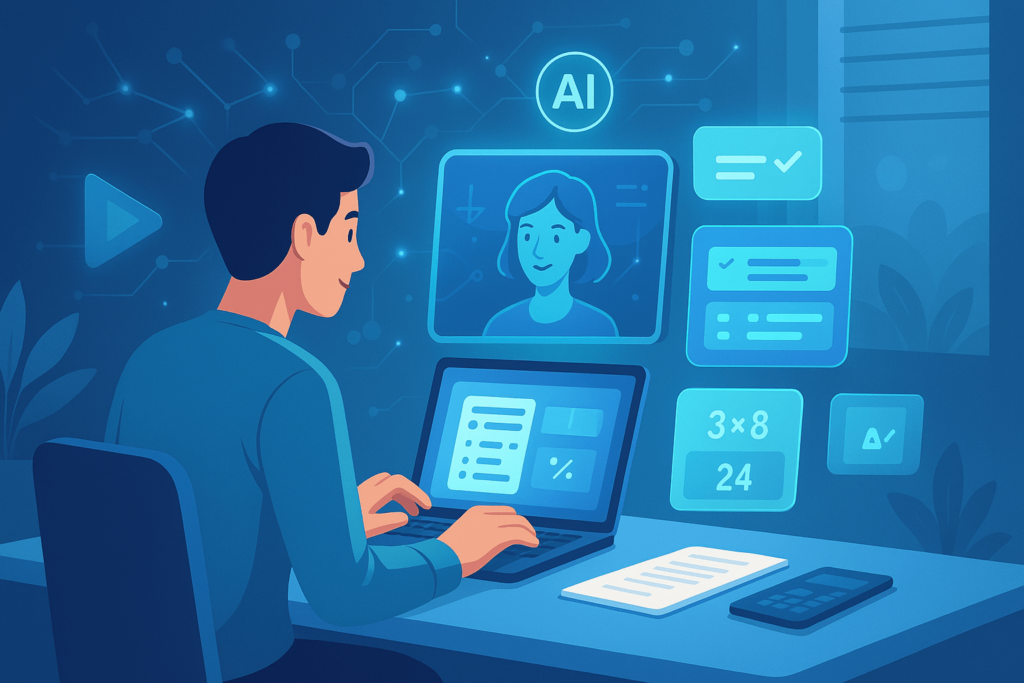
In this article, we explore how AI tutors, smart content, and advanced analytics are fueling the rise of adaptive e-learning platforms across schools, universities, and corporate environments.
What Is Adaptive E-Learning?
Adaptive e-learning refers to technology-powered education that personalizes content and learning paths based on a learner’s real-time performance and behavior. Unlike traditional learning management systems (LMS), which deliver the same material to everyone, adaptive platforms use technologies such as:
- Machine Learning (ML) to predict learner needs
- Natural Language Processing (NLP) to understand user queries and inputs
- Learning Analytics to track engagement, comprehension, and progress
This shift enables a more responsive, student-centered model of education.
The Role of AI Tutors in Digital Learning
1. Personalized Instruction at Scale
AI tutors are designed to mimic aspects of one-on-one instruction. By assessing individual learner progress and patterns, these tutors adjust explanations, examples, and even the order of topics to match a student’s pace and knowledge gaps. This level of personalization has traditionally been available only through private tutoring—now it’s scalable.
2. 24/7 Support & Engagement
AI-powered chatbots and virtual tutors provide around-the-clock assistance. Whether a learner is studying late at night or across time zones, AI tools offer explanations, answer questions, and provide reinforcement exercises, fostering continuous engagement.
Smart Content: Dynamic & Data-Driven
Smart content refers to instructional materials that adapt in real time based on learner interactions. It includes:
- Auto-generated quizzes that focus on recently misunderstood concepts
- Interactive flashcards that evolve with learner progress
- Modular videos that adjust length and complexity depending on user engagement
By reducing the workload of educators and increasing the relevance of learning materials, smart content enhances both efficiency and outcomes.
Use Cases of Adaptive E-Learning in Action
K–12 Education
In primary and secondary education, AI tutors help students build foundational skills at their own pace. Platforms analyze response times and accuracy to guide the next activity or provide immediate feedback.
Higher Education
Universities are integrating adaptive tools through platforms like Coursera, edX, and Khan Academy. These platforms use AI to recommend courses, identify at-risk students, and provide personalized learning tracks.
Corporate Training
Learning and Development (L&D) teams in businesses use adaptive LMS tools such as Docebo and EdApp to personalize employee training. The content adapts based on role, performance, and departmental goals.
The Benefits of Adaptive Learning Platforms
- Higher Retention and Engagement: Personalized pathways improve motivation and long-term retention
- Early Intervention: Systems can alert educators about struggling learners in real-time
- Scalability: One platform can serve hundreds or thousands of learners with individualized instruction
- Data-Driven Insights: Teachers and administrators get access to actionable dashboards to refine strategies
Challenges and Concerns
Despite their potential, adaptive platforms come with challenges:
- Data Privacy: Collecting and analyzing personal learning data raises ethical concerns
- Automation Overdependence: Risk of neglecting human elements such as empathy and mentorship
- Access Inequality: Not all learners have reliable devices or internet to access adaptive tools
Addressing these concerns is crucial to ensuring inclusive and ethical deployment.
The Future of Learning: AI + Human Educators
AI will not replace teachers. Instead, it will augment them. Educators will become facilitators, mentors, and emotional guides, while AI handles personalization, repetition, and scalability.
The synergy between human creativity and AI precision is the foundation of future-ready education. Teachers can focus on developing critical thinking, emotional intelligence, and collaborative skills—areas where machines still fall short.
Conclusion & Takeaway
From AI tutors to smart content, adaptive e-learning platforms are setting a new standard in personalized education. They are not just tools; they are ecosystems designed to meet each learner where they are and help them grow efficiently.
Is your organization or classroom ready for the shift? Explore adaptive tools that match your learners’ needs—and watch the transformation unfold.

Berbagi cerita seputar karier, freelance, traveling hemat, dan pola hidup sehat
ala anak muda Indonesia. Di Kiddie Joy, gw nulis tutorial praktis biar lo bisa
ngerjain hal-hal kecil yang bikin hidup lebih ringan, mulai dari rapiin keuangan
freelance, jaga kesehatan di tengah deadline, sampai ngeplan liburan tanpa bikin
dompet jebol.